


By the Witness Radio team.
In Kyankwanzi District, central region of Uganda, tens of thousands of people displaced to make way for the Kikonda Forest Plantation say they are still waiting for justice more than two decades after losing their land to Global Woods Limited in 2002 to plant trees for carbon offsetting.
Recently, Witness Radio journalists visited the project-affected families. The families described the ordeal as a deep frustration and lasting pain. They said their forceful removal from their land by government authorities paved the way for the tree-planting project. This removal was never subjected to any consultation. Former landowners never consented. To date, they have no idea how the project will improve their livelihoods.
Some families living on the plantation’s edge report ongoing tensions, intimidation, and occasional violence involving workers, along with severe weather changes that have harmed food security in the area.
The project claimed to combat climate change while contributing to local development. However, it caused a drought due to monoculture trees planted by the project implementers. For many who lost their homes and livelihoods, this tells a different story. To them, Kikonda is a painful reminder of dispossession, broken promises, and a justice process that has remained out of reach for more than twenty years.
“We were removed forcefully. We have never been compensated. We have never been heard,” said Mrs. Nalubega Zulaikah, one of the leaders of the affected families, recalling years of uncertainty and marginalization and having no hope for remedies.
Their story is not the only one. In Africa, efforts to attract investment often hurt local people’s rights. Big projects in forestry, mining, farming, and construction still help the economy, but they also raise complaints about land grabbing, forced relocation, environmental harm, poor working conditions, and limited access to justice.
At the same time, governments across the continent are embracing Business and Human Rights (BHR) frameworks designed to ensure that economic development does not come at the expense of people and the environment.
National Action Plans (NAPs), multi-stakeholder consultations, human rights due diligence, and regulatory reforms are emerging across East and the Horn of Africa. These initiatives aim to ensure businesses respect human rights and provide remedies when harm occurs. Despite this progress, sectors driving economic growth remain linked to serious human rights concerns.
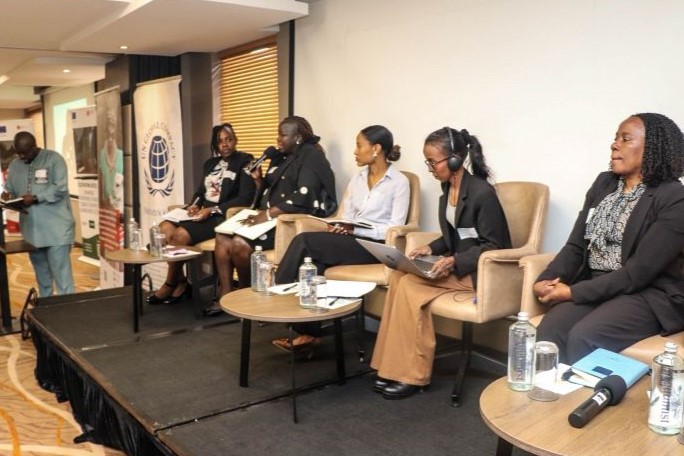
These contradictions dominated discussions at a regional forum on Business and Human Rights in East and the Horn of Africa, where government officials, national human rights institutions, civil society organizations, and development partners reflected on both achievements and persistent challenges.
The two-day dialogue was concluded on Thursday, the 11th. Convened by DCA and partners, the event’s theme was “Beyond Compliance: Strengthening Accountable and Rights-Centered Supply Chains in East and Horn of Africa.” The forum brought together governments (policy and regulation), businesses (implementation), civil society (advocacy and monitoring), development partners (support and funding), and human rights defenders (case reporting and advocacy).
“We still see that people continue to suffer from business-related harms, often on a large scale, with irreversible damage done to communities and the environment,” Professor Damilola Olawuyi, a member of the United Nations Working Group on Business and Human Rights, told participants, adding that, “We still also see that speaking up against business-related risks and impacts remains a very risky undertaking in many parts of Africa, particularly for human rights and environmental defenders who raise concerns about agribusiness and other investments.”
Several countries in the region have taken significant steps toward institutionalizing the principles of Business and Human Rights.
Uganda adopted its National Action Plan on Business and Human Rights in 2021 and is already undergoing a review process. Kenya was the first African country to develop such a plan and continues to review and strengthen implementation. Tanzania has completed drafting its own NAP and awaits government approval. Ethiopia is finalizing its first plan, and Djibouti has entered the implementation phase.
Officials attending the two-day forum pointed to a growing range of initiatives aimed at improving corporate accountability. These include public awareness campaigns, training government agencies and businesses on human rights obligations, developing digital complaint-reporting systems, and introducing tools to assess the human rights impacts of investment projects.
“We have created public awareness on human rights and businesses because most times we thought businesses were only for profit and had nothing to do with human rights,” said Harriet Asibazuyo, Uganda’s National Coordinator for Business and Human Rights at the Ministry of Gender, Labor, and Social Development.
But participants at the forum said these new policies are not really improving life for many local and indigenous groups who are harmed by investment projects.
Delegates from Uganda, Kenya, Tanzania, Ethiopia, and Djibouti listed mining, resource extraction, farming, and large building projects as industries most often linked to human rights abuses.
In Tanzania, officials highlighted extractive industries, agriculture, and infrastructure development as major drivers of displacement and other related impacts, noting that tensions continue to emerge around these sectors, particularly as growing populations place increasing pressure on land and natural resources.
“This is where we see more violations related to land dispossession, environmental degradation, and pollution. Communities are often not adequately engaged in the development of these projects. This lack of engagement results in increased human rights violations,” Jovina Muchunguzi of Tanzania’s Commission for Human Rights and Good Governance explained.
Uganda officials also reported similar concerns. According to Asibazuyo, mining communities continue to grapple with child labor, gender-based violence, environmental pollution, economic exploitation, and land-related conflicts.
“The local communities put in a lot, but the return they get is so little,” she said.
While these National Action Plans focus on Protect, Respect, and Remedy, securing justice remains very difficult in the region.
In Ethiopia, participants pointed to under-resourced institutions and weak enforcement mechanisms. There is also widespread fear among workers who seek accountability for abuses.
“More than 80 percent of workers in fields like farming, factories, and mining are women. Sexual harassment is very common. Workers are not allowed to form groups, and some lose their jobs illegally. Many are afraid that if they go to court, they will be fired,” said Hawi Asfaw, Director of the Socio-Economic Rights Department at the Ethiopian Human Rights Commission.
Kenya reported an increase in litigation related to land rights, environmental harm, and business-related human rights abuses, with courts increasingly serving as arenas where affected communities seek accountability.
In Uganda, communities affected by land-based investment projects often struggle to challenge companies through legal channels. They cite financial barriers, lengthy court processes, and power imbalances.
Experts at the forum called for stronger complaint procedures and easy ways to report problems. They also urged the creation of better-funded groups to investigate complaints and ensure protections are enforced.
Participants at the meeting also said it is important to stop human rights abuses before they happen, not just react to them afterward.
Human rights due diligence is a process through which businesses identify, prevent, mitigate, and address adverse human rights impacts. This emerged as a central theme throughout the discussions.
“We must identify risks before they materialize,” said Oumalkaire Atteye Wais, highlighting the importance of early intervention and prevention.
More than two decades after eviction, families affected by the Kikonda plantation are still waiting for compensation, accountability, and recognition of harm.
For many participants at the forum, this gap between policy and reality remains the defining challenge of the Business and Human Rights agenda in the region.
As governments continue to develop National Action Plans. Businesses are encouraged to conduct human rights due diligence while institutions are pledging stronger oversight. But for communities facing displacement, progress is not measured by policies or conference statements.
They measure progress by whether justice comes to pass or whether the promise of responsible business remains out of reach for those who most need it.