DR Congo crisis: Washington’s brokered peace agreement is rendered useless as fighting, forced land displacement, and mineral exploitation persist…
By the Witness Radio team.
After the signing of the Washington Accords, a peace and prosperity deal between the Democratic Republic of the Congo and Rwanda brokered by the United States, many Congolese hoped the agreement would finally bring stability to the country’s long-troubled eastern region.
Instead, persistent violence has continued, raising questions among civil society groups and citizens about whether the agreements can truly deliver peace.
According to the US State Department, the Washington Accords were intended to reaffirm both countries’ commitment to implementing the peace agreement signed in Washington, D.C., on June 27, 2025. The deal was also intended to advance a vision of regional cooperation through a Regional Economic Integration Framework (REIF), which aims to promote peace, security, and economic growth in the Great Lakes region.
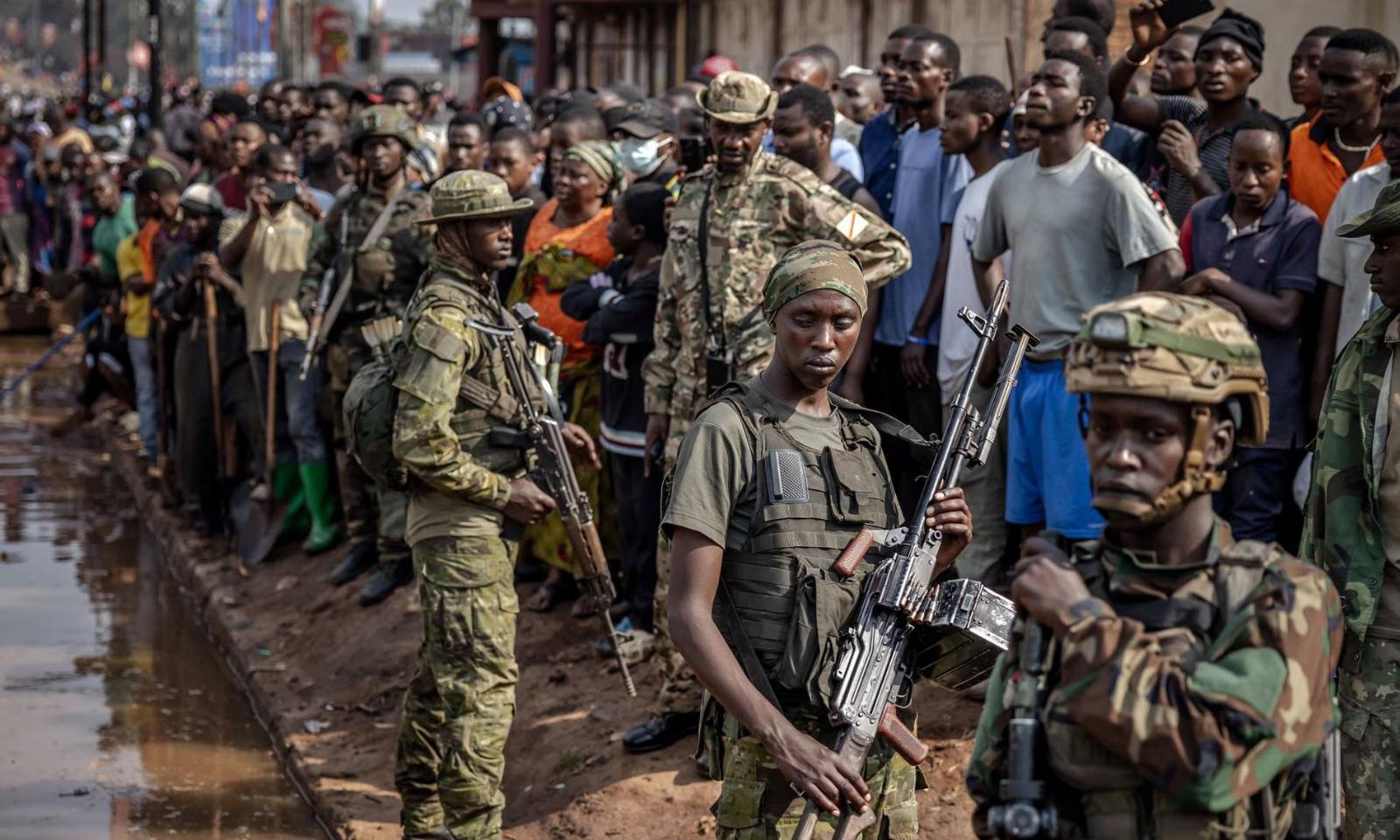
Fighting continues in eastern Congo, involving the March 23 Movement (M23) and Congolese government forces (FARDC), with Rwanda and the DRC government each accusing the other of supporting violations of existing agreements.
Authorities in the Democratic Republic of Congo (DRC) have long accused Rwanda of backing the March 23 Movement (M23) rebel group, allegations that Rwanda initially denied for decades. However, according to a January 24 article by The Rwandan, an online news platform based in Rwanda, a high-ranking Rwandan official later acknowledged security coordination with M23/AFC rebels.
Now, Congolese civil society organizations reveal that the Washington Accords are failing to address issues of justice or Rwanda’s responsibility in the war of aggression, invasion, and occupation of eastern DRC.
The Mobilization to Safeguard Congolese Sovereignty and Autonomy (MOSSAC), an ad hoc coalition of 81 Congolese civil society groups, formed to voice concerns about the occupation and to demand a lasting peace grounded in security, accountability, sovereignty, and justice in the DRC revealed in an interview with Witness Radio that these accords are taking Congolese back to the days of King Leopold, where a colonial resource grab is imposed, and might makes right.
“These agreements, pushed on the DRC by the Trump administration during the ongoing violent incursion, represent the results of a negotiation at gunpoint. It’s all about how they’re going to take the minerals and have all these business deals. There’s nothing in there that gives any detail on what they’re going to do to create peace.” MOSSAC International outreach coordinator, Dr. Deborah S. Rogers, told Witness Radio.
The Washington Accords consist of three separate agreements. The first is a peace agreement signed by both Congo and Rwanda, calling for a ceasefire and improved relations. The second establishes the Regional Economic Integration Framework, which promotes joint economic cooperation and allows for collaboration in exploiting regional resources. The third agreement, the Strategic Partnership Agreement, was signed by the Congolese government and the United States to strengthen cooperation on economic development and resource security.
But critics argue that, taken together, these agreements resemble what some observers have described as a “peace for minerals” arrangement, as both the United States and Rwanda see the DRC as a key hub for strategic minerals.
“Each of these three agreements has its own challenges. When viewed together, however, they are often framed as part of what is called the “Peace for Minerals” agreement. They are only targeting DRC’s resources, including land and minerals,” Dr. Deborah added.
Conflict in eastern Congo has persisted for decades and is deeply intertwined with regional politics and competition for natural resources.
The conflict dates back to the aftermath of the 1994 genocide in Rwanda, when nearly two million Hutu refugees fled into eastern Congo. Some extremist groups formed armed militias there, leading to escalating tensions with Tutsi groups and drawing neighboring countries into the conflict.
The resulting violence sparked the First Congo War (1996–1997) and subsequent conflicts that have devastated the region. Since 1996, the wars in eastern Congo are estimated to have contributed to the deaths of roughly six million people and the displacement of people.
Civil society groups say the violence has destroyed infrastructure, displaced millions, and caused widespread human rights abuses, including rape, targeting them to drive them off resource-rich land.
Eastern Congo is rich in natural resources, including gold, copper, diamonds, and coltan, minerals essential for global industries ranging from electronics to renewable energy.
Observers say the region’s mineral wealth has long fueled both local and international interests.
“We view this as a reward for Rwanda for having invaded and occupied these lands and seized the mine sites. They are being granted through an agreement what they initially took by force, effectively legalizing and normalizing the ongoing plundering of DRC’s minerals and their transfer to Rwanda. Rwanda seeks land because it is a small country with a growing population, and in the territories, it controls, it uses terror to drive people out,” she added.
Shockingly, civil society officials say that lands belonging to displaced Congolese are being taken over by Rwandan settlers. Families returning to their homes after temporary lulls in the violence often find their land and houses already occupied.
“Meanwhile, the people from Rwanda are coming in and settling on those farms and in those homes. So, when people come back, they discover that their lands and their homes have been taken over.” Dr. Deborah further revealed
These deals have drawn a lot of criticism from both international and National organizations, including civil societies. The Oakland Institute described the deals as ‘the latest US maneuver to control Congolese critical minerals” in its report, shafted: The Scramble for Critical Minerals in the DRC, published last year.
“US involvement in Congolese affairs has always been unequivocally tied to the goal of securing access to critical minerals. “The ‘peace’ deal comes after decades of US training, advising, and sponsoring foreign armies and rebel movements, and at a time when Rwanda and its proxy M23 have expanded territorial control in eastern DRC. This is a win-lose deal that serves US mining interests and rewards Rwanda for decades of pillaging Congolese resources,” Mr. Frédéric Mousseau, report co-author and Policy Director at the Oakland Institute, revealed.
MOSSAC also observes that the agreements do not address issues of justice or the culpability of Rwanda in the war of aggression, invasion, and occupation of eastern DRC, but instead reward Rwanda by presenting it a pathway to normalize and make legal its pillaging of Congolese land and resources.
“How can this be a proper agreement when people are being killed during the negotiation process? There’s no justice, no accountability for decades of invasion and resource theft. Lasting peace cannot happen without justice first.” Another Mossac representative told Witness Radio.
Despite the promises of peace and economic integration, violence continues in eastern Congo.
Civil society groups say M23 forces have expanded their territorial control in several provinces, including North Kivu, South Kivu, Ituri, and Maniema. They argue that ongoing attacks undermine the credibility of the agreements. “Every day since the accords were signed, there have been violations,” Dr. Deborah maintained
Efforts by Witness Radio to obtain a comment from the Congolese government were unsuccessful. Officials from the Ministry responsible for internal affairs did not respond to our calls/emails.