Nakuru County has adopted an agroecology policy to boost climate-resilient, sustainable agriculture.
By Witness Radio team.
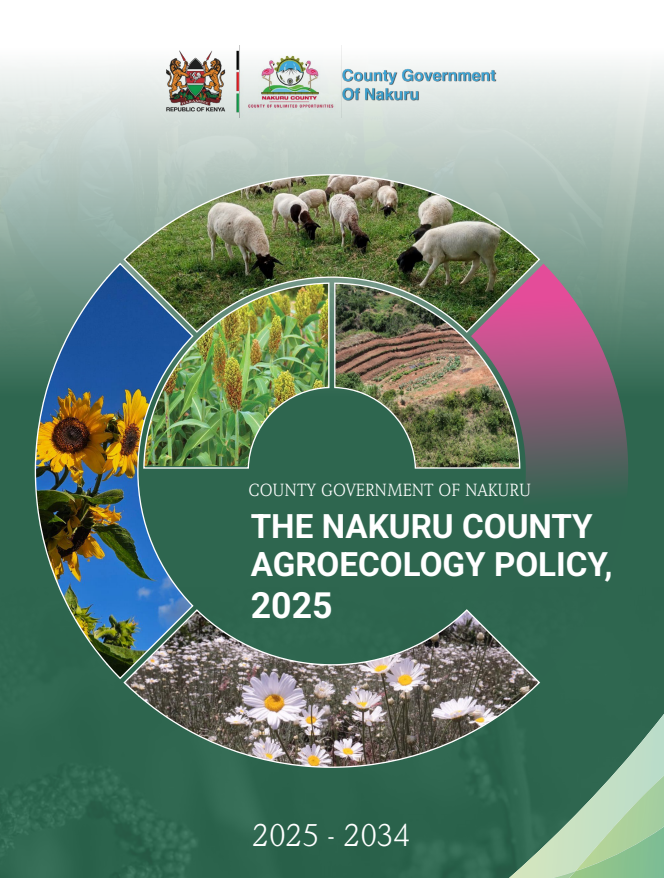
The Nakuru County government has formally adopted its Agroecology Policy 2025, a strategic framework designed to transform local agriculture through sustainable and climate-resilient practices, aiming to increase food productivity. This policy will provide practical guidelines and support to help farmers transition smoothly to agroecological methods and address on-the-ground concerns.
The law is being passed at a time when many farmers are increasingly using chemicals to increase yields, a practice that experts have warned contributes to what they describe as “silent deaths” through chronic exposure, endangering human health and degrading ecosystems. Food experts and agroecologists think that agroecology is the game-changer in mitigating these risks.
According to a 2019 public health report by the World Health Organisation (WHO), exposure to synthetic pesticides poses a significant public health concern, with chronic exposure linked to increased risks of cancer, respiratory illnesses, and neurological disorders, raising concerns about the long-term health impacts of chemical-intensive farming.
According to county officials, the law represents a move away from traditional, high-input farming toward an ecological, nature-based approach. They highlighted that the policy’s goals are to improve farm biodiversity, strengthen soil health, and protect environmental health, inspiring pride and collective responsibility among residents and advocates.
“We are moving beyond conventional farming to secure both food and nutrition security for the county,” Deputy Governor David Kones said, emphasizing that the policy will support farmers’ health and long-term prosperity, fostering hope and reassurance among stakeholders.
The policy supports initiatives to create food systems that are socially inclusive, economically viable, and environmentally sound. It aligns with Kenya’s National Agroecology Strategy for Food System Transformation 2024–2033.
Long-term results include increased farm productivity, better food and nutritional security, higher household incomes, and inclusive socioeconomic transformation, according to the policy document.
As stated in Kenya’s National Agroecology Strategy for Food System Transformation 2024–2033, the policy is a component of a larger national movement toward agroecology. Kenya’s Ministry of Agriculture and its partners created this strategy to support resilient, sustainable, and socially inclusive food systems.
To align local agriculture with the national vision, several counties, including Nakuru, Murang’a, Vihiga, West Pokot, and Kiambu, have begun adopting agroecological frameworks.
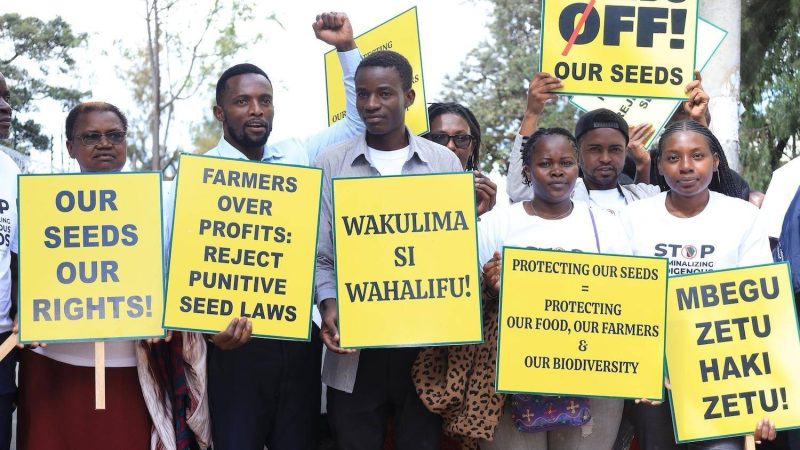
This policy shift also reflects a growing recognition that smallholder farmers’ rights are central to resilient and sustainable agriculture. The recent legal victory affirming farmers’ rights to freely use, save, exchange, and sell indigenous seeds aims to empower farmers and respect their traditional practices, fostering a sense of pride and agency.
Agroecologists argue that protecting farmer-managed seed systems is essential for climate resilience, as indigenous seeds are often better adapted to local environments and require fewer or no chemical inputs.
In December last year, the High Court ruled in favour of 15 smallholder farmers who had filed a constitutional petition in 2022, challenging provisions of the Seeds and Plant Varieties Act (SPVA) and the Seeds and Plant Varieties (Seeds) Regulations, 2016. The farmers argued that the laws contained restrictive clauses that violated fundamental rights guaranteed under Kenya’s Constitution.
The ruling was welcomed by the United Nations Working Group on Peasants and Other People Working in Rural Areas, which noted that the judgment rightly recognizes seed sharing not as a criminal act, but as a fundamental element of peasants’ identity, resilience, and contribution to national food systems. The court consequently upheld farmers’ right to continue the traditional practice of sharing local seeds.
According to the Food and Agriculture Organisation (FAO), smallholder farmers still produce more than 70% of the world’s food, despite the growing push toward commercial seed regulation and large-scale mechanized agriculture.
Kenya is emerging as one of the African countries leading the push for agroecology, combining policy, legal frameworks, and farmer empowerment. Across the continent, nations face the dual challenges of climate change and food insecurity, often worsened by chemical-intensive farming and land degradation. Agroecology, through crop diversification, soil restoration, and ecologically based farming, offers a pathway to more resilient food systems.
In addition to Kenya, countries like Morocco, Senegal, Uganda, and Malawi are beginning to promote agroecological practices through farmers’ cooperatives, civil society initiatives, and local policies.