


By the Witness Radio team.
As climate change, commercial agriculture, and changing agricultural policies place growing pressure on farmer-managed seed systems, the first-ever Eastern Africa Indigenous Seeds Conference will be convened in Nairobi, Kenya, to discuss the future of indigenous seeds and food systems in the region.
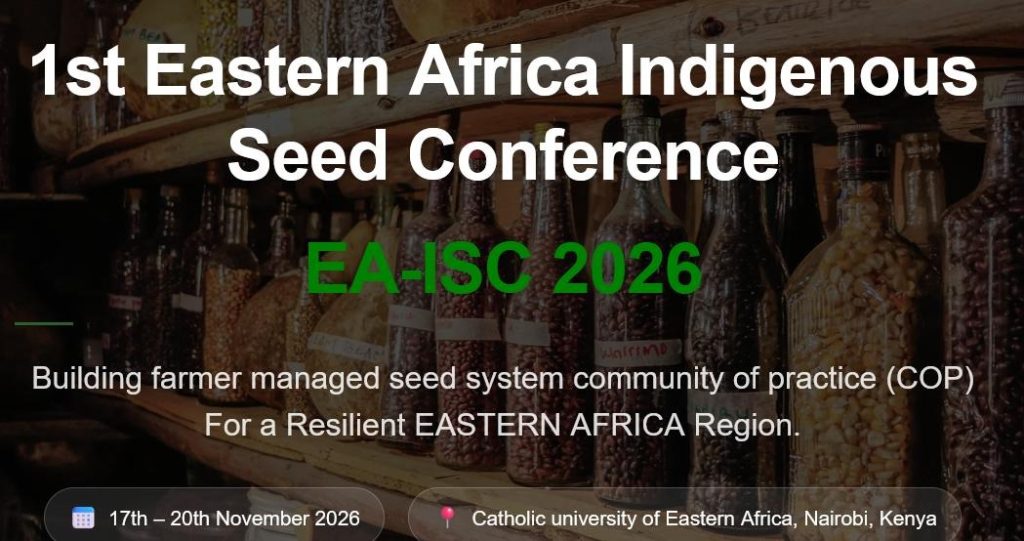
The first-ever Eastern Africa Indigenous Seed Conference, convened by Seed Savers Network (SSN) in collaboration with other key partners, including Witness Radio, will bring together farmers’ organizations, researchers, policymakers, seed custodians, and food sovereignty advocates from 17th to 20th November 2026 in Nairobi, Kenya. This gathering offers a unique chance for regional stakeholders to influence the future of indigenous seed systems and amplify their collective voice.
According to Daniel Wanjama, Executive Director of Seed Savers Network, the conference will offer indigenous communities, seed-saving farmers, and practitioners worldwide an opportunity to exchange experiences, learn from one another, and strengthen collaboration on indigenous seed conservation.
“It’s a very important moment for all of us because it will be our moment to exchange our practices, to learn from each other, and also borrow whatever we can from each other.” Mr. Wanjama said.
He said the gathering would also provide space to recognize women’s crucial role in seed saving, agricultural biodiversity conservation, and the preservation of indigenous knowledge systems.
The four-day conference, set to take place at the Catholic University of Eastern Africa, occurs at a critical time when climate change, biodiversity loss, and repressive agricultural policies threaten traditional farming systems and local seed diversity.
For generations, indigenous seeds have helped communities adapt to changing weather patterns, preserve biodiversity, and maintain culturally rooted food systems. Recognizing their vital role can inspire stakeholders to value and protect local knowledge and seed diversity.
The conference, themed “Realizing the Right to Food through Seed Sovereignty,” highlights the importance of indigenous seeds in resilient food systems and seed sovereignty and encourages participation from a wide range of stakeholders.
Participants will engage in panel discussions, policy dialogues, side events, knowledge-sharing sessions, exhibitions, and regional networking to strengthen cooperation among farmers, farmer organizations, researchers, civil society actors, development partners, and government institutions.
Key discussions will examine how indigenous and local seed varieties contribute to climate adaptation and resilience, emergency seed responses during crises and disasters, conservation of agricultural biodiversity, and food and nutrition security, among others.
“The conference will create a lasting platform through which stakeholders can continue interacting, exchanging information and knowledge, and developing joint approaches to address shared challenges affecting indigenous seed systems,” Daniel added.
As global conversations on food systems and climate resilience intensify, the conference offers Eastern Africa a vital chance to reaffirm indigenous seeds as a cornerstone for sustainable agriculture and community resilience, inspiring collective action.