The Witness Radio and Seed Savers Network Joint Radio program boosts Farmers’ knowledge of seed and food sovereignty.
By Witness Radio team
Across Africa, seed laws are increasingly structured to favor commercial seed systems, leaving smallholder farmers with limited control over the seeds they rely on for food production. While governments often justify these laws as necessary for quality control and increased productivity, farmers and civil society organizations argue that they deepen dependency, erode Indigenous knowledge, and undermine food sovereignty.
Smallholder farmers produce the majority of the world’s food. Recognizing practices such as saving, exchanging, and replanting seeds can empower farmers and reinforce their vital role in food security.
In response to this challenge, Witness Radio, in partnership with the Seed Savers Network (SSN) in Kenya, is joining hands to save African indigenous seeds by using media to build power and share knowledge and skills with smallholder farmers across Africa and beyond on seed sovereignty and farmer-led food systems.
Last Thursday, Witness Radio and the Seed Savers Network aired the first episode of the program live, featuring representatives of smallholder farmers and civil society organizations from across the African continent. The discussion, which was live on Witness Radio, focused on sharing Indigenous knowledge and practical approaches to saving and conserving African Indigenous seeds.
“It is a crucial time to speak about food sovereignty because, as Indigenous People, talking about food sovereignty is not just an agricultural issue, according to us. It’s a vital act of decolonization and a sign of cultural survival to us and also self-determination.” Said June Bartuin, the Executive Director for Indigenous Peoples’ for peace and climate justice, Kenya, during the first episode of the program.
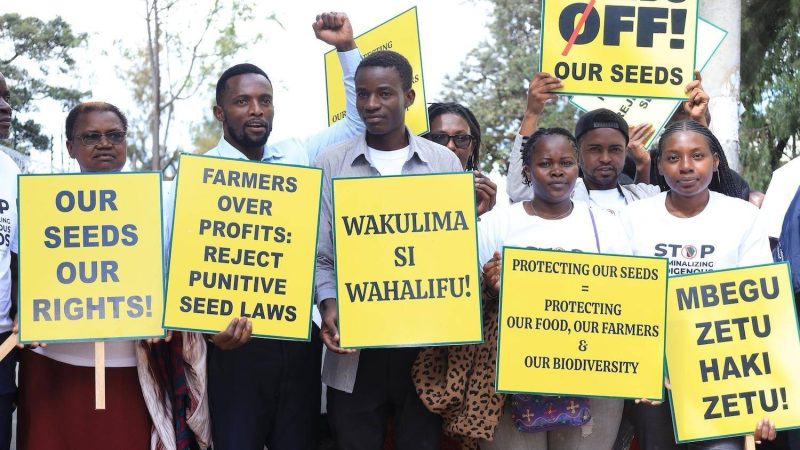
Across Africa, several policies and laws restrict farmers’ rights to save, exchange, and sell their own seeds. In East Africa, the recently introduced EAC Seed and Plant Varieties Draft Bill 2025 has sparked protests from smallholder farmers and activists, who argue that some of its provisions threaten farmer-led seed systems and favor multinational seed companies.
In Ghana, the Plant Variety Protection Act of 2020 restricts farmers’ seed management practices, underscoring the urgent need for policy reforms that support farmer-led seed systems.
“We have this Plant Variety Protection Act of 2020, which has made it easier for seed companies and the commercial sector to control the seed system,” said Atim Robert Anaab, who works with Trax Ghana and the Beela Project in Northern Ghana, adding that, “The law requires seeds to be certified according to standards that most small-scale farmers simply cannot meet.”
Such laws have reshaped Africa’s food systems by pushing farmers toward commercial seeds that must be purchased every planting season. These seeds are often sold alongside chemical fertilizers and pesticides, significantly increasing production costs for smallholder farmers.
Priscilla Nakato, Chairperson of the Informal Alliance of Communities Affected by Irresponsible Land-Based Investments in Uganda, noted that these policies have also displaced traditional storage and seed preservation practices.
“In the past, every household had a granary, used not only to store food but also to preserve seeds for the next planting season. Many communities still hold this resilience, and reviving these practices can inspire hope for food sovereignty.”
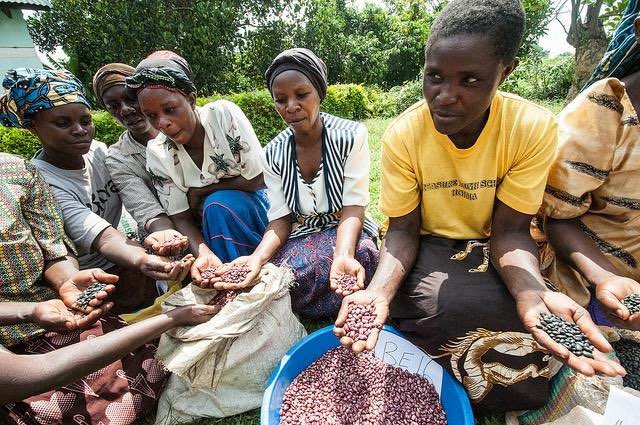
Beyond economics, restrictive seed laws are accelerating the erosion of Indigenous knowledge and cultural practices. June Bartuin explained that women were traditionally the custodians of seeds, preserving them using low-cost methods such as smoke storage in traditional houses.
“This maize could be stored for two, three, even five years, and when planted, it germinated very well,” she added.
The collaboration between Witness Radio and the Seed Savers Network brings together grassroots organizing and community media to amplify farmers’ voices. The Seed Savers Network, a grassroots organization based in Kenya, works with more than 500,000 farmers and supports 121 community seed banks across the country.
According to Mercy Ambani, Resource Mobilization Officer at Seed Savers Network, the organization focuses on rebuilding farmers’ confidence, knowledge, and rights, making platforms such as Witness Radio ideal for reaching farmers directly.
“Our vision is to protect seed sovereignty, conserve biodiversity, and strengthen farmers’ rights through policy advocacy and practical action,” she said.
Through initiatives such as the Seed School, farmers, researchers, and activists are trained in seed selection, storage, preservation, and community seed bank management.
“In December 2024, Kenyan farmers achieved a landmark court ruling that struck down parts of the Seed and Plant Varieties Act, showing the power of collective action and legal advocacy to protect farmers’ rights.”
“This ruling showed that there is power in numbers,” said Ambani. “When farmers raise their voices together, change is possible.”
Regional knowledge exchange is also growing. Farmers from Uganda and Ghana who attended the Seed Savers Boot Camp have returned to their communities to establish household seed banks, kitchen gardens, and farmer field schools.
“My home has become a farmer’s field school. People are hungry for this knowledge,” said Nakato.
Without reforms that recognize and protect farmer-managed seed systems, farmers risk losing control over their seeds — and with them, control over food, culture, and livelihoods.
“If we lose our seeds, we lose our culture, our food, and our future,” Bartuin emphasized.
Wokulira Geoffrey Ssebaggala, Team Leader at Witness Radio, highlighted the importance of creating space for farmers to share knowledge and experiences.
“We are providing a platform where farmers and experts can exchange knowledge on sustainable farming practices. We believe this radio content will have a real impact on food and seed sovereignty across Africa.” Mr. Ssebaggala added.
The radio series will continue to provide practical knowledge, farmer voices, and policy analysis to support sustainable agriculture across Africa.