Women farmers in East Africa refuse to vacate their land to give way to land-based investment projects.
By the Witness Radio team and Ziada Kassimu, a Tanzanian Human rights defender.
Every day, Sharoon walked to the sea, not only to fetch water but also to fish. The Indian Ocean has always been the lifeline of her family and community in Chongoleani village, on Tanzania’s northern coast. It has provided food, income, and a sense of belonging. Today, much of that has changed.
The arrival of the East African Crude Oil Pipeline (EACOP) project marked a turning point for the community. Suddenly, the sea no longer meant security. It displaced families, disrupted livelihoods, and left future generations—who had built their lives around the ocean—uncertain about their future.
“We are not fighting these developments because we want conflict. We are fighting because they take our land, which is our life,” Sharoon told fellow women defenders during a regional gathering in Nairobi.
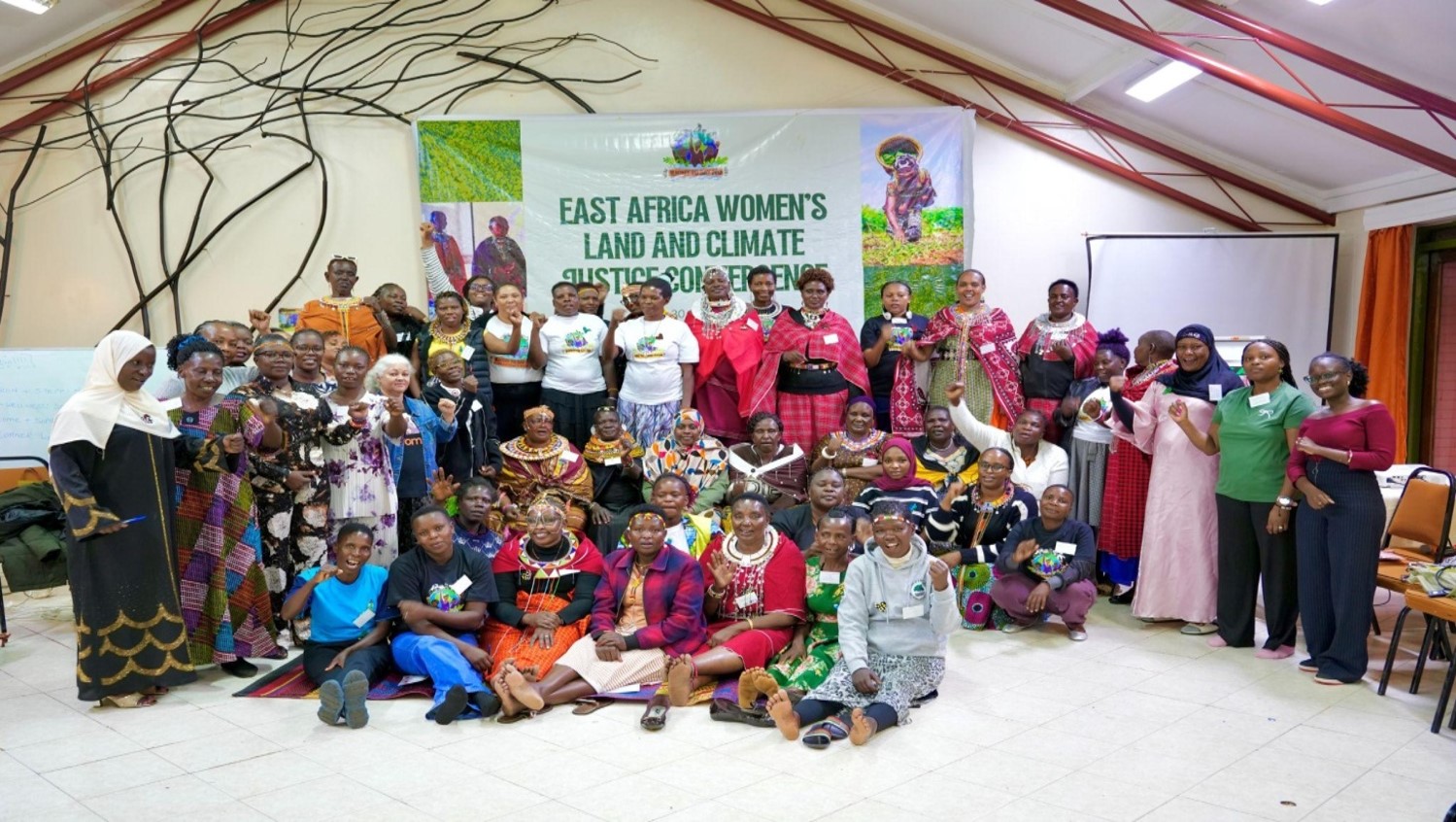
As I listened to her, the room fell silent. Her words carried the weight of loss. They also showed the determination of a woman refusing to surrender what remains of her community’s dignity. She was one of dozens of women defenders who gathered in Nairobi, Kenya, from April 27–30 for the East Africa Women’s Land and Climate Justice Convergence.
Throughout the EACOP corridor, stretching from Shinyanga to Tanga, women shared their perspectives. They recounted how compensation processes have fallen short of restoring livelihoods, while land-use restrictions continue to undermine economic independence.
Amid these difficult experiences, women from Uganda, Tanzania, Kenya, and other African countries came together not simply to share stories of suffering, but to build solidarity and strengthen resistance against projects threatening their lands and livelihoods.
What struck me most throughout our gathering was how similar the stories we shared were, even though we came from different countries.
In Kenya, women from Turkana described how the South Lokichar Oil Project has worsened historical injustices in land ownership. They spoke about losing grazing land and natural resources. They said they are excluded from decisions about their communities. Women explained that although laws promise equality, customary systems still deny them real control over land.
Since oil was discovered in Turkana in 2012 with Tullow Oil’s Ngamia-1 well, exploration and drilling have spread across the region. The discovery raised hopes for economic growth and better livelihoods. But many local pastoralist communities say the benefits have not materialized. Instead, they worry about inadequate compensation, land loss, and being excluded from decision-making. These concerns have increased frustration and fueled tensions.
In Kenya, women from Lamu described how port development projects have disrupted their access to ancestral fishing grounds and farming areas that have sustained families for generations.
Lamu Port South Sudan – Ethiopia Transport (LAPSSET) Corridor Project is an infrastructure project dedicated to interconnecting the East African countries of Kenya, Ethiopia, and South Sudan.
Turning to Tanzania, Maasai women from Loliondo shared painful testimonies of forced evictions for conservation and tourism. They recounted losing ancestral lands, livelihoods, and cultural identity. They described displacement trauma and tensions as communities were pushed into smaller areas.
On 10 June 2022, Tanzanian security forces launched an operation to disperse Maasai residents who had gathered in Ololosokwan village, Loliondo. They were opposing a government-led land demarcation exercise carried out for conservation. Witnesses and rights groups said security personnel used live ammunition and tear gas against protesters. The operation involved agencies including the Tanzania People’s Defense Force, the Tanzania Police Force, and its Field Force Unit, as well as rangers from the Ngorongoro Conservation Area Authority (NCAA) and Tanzania National Parks (TANAPA).
The incident forms part of a longstanding land dispute between the Maasai Indigenous community and the Tanzanian government. For decades, Maasai pastoralists have faced growing pressure on their traditional grazing lands as conservation areas have expanded, often without meaningful consultation or participation from affected communities.
In Loliondo, in Ngorongoro District of Arusha Region, tensions have risen over hunting concessions granted to tourism and hunting companies. These companies have operated in the area since 1992. Community members say that these deals have increasingly limited their access to ancestral lands and threatened their way of life.
Meanwhile, we heard from women in Mahenge about the impacts of graphite mining. They described how years of extraction have transformed their environment and created uncertainty for future generations.
In the Ulanga district of Southern Tanzania, I learned that the Australia-based company BlackRock is operating the Mahenge Graphite Project. The project is funded by a US$59.6 million loan from the Development Bank of Southern Africa (DBSA) and other financiers. The community told me that, despite promises of benefits, the project is causing significant harm.
When Ugandan defenders spoke, they revealed resource extraction as a regional crisis threatening women’s survival. In Karamoja, mining by companies such as Sunbelt Mining and DAO Uganda displaces women from artisanal mining, their main source of income. In Hoima, the EACOP project continues to drive forced displacement and disrupt livelihoods.
Across both regions – in Uganda and Tanzania – women face land loss, rising household tensions, and the destruction of ecosystems that sustain their communities.
“Yet even in the face of these injustices, resistance continues to grow.”
But what I witnessed in Nairobi was not only grief. Beyond hardship, there was courage. I saw women refusing to be silenced despite threats, intimidation, displacement, and economic hardship. I watched them exchange strategies, comfort one another, and build alliances that stretch beyond borders. Their stories revealed that resistance is not merely about opposing destructive projects. It is about defending identity, culture, dignity, and the right of communities to determine their own future.
The gathering reminded me that while extractive industries, conservation-linked evictions, and mega-development projects may operate across borders, so too can solidarity.
The women I met are not asking for special treatment. They are demanding recognition of rights that already belong to them: the right to land, the right to participate in decisions affecting their communities, and the right to pursue development that does not come at the cost of their survival.
As I left Nairobi, Sharoon’s words still echoed in my ears. “We are fighting because this land is our life.”
Words that not only capture the struggle of one woman in Chongoleani but also the shared reality of countless women across East Africa standing on the front lines of land and climate justice