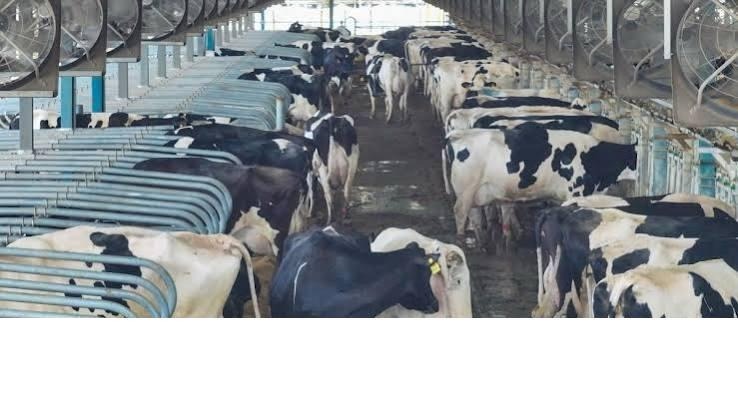
Development finance faces growing scrutiny as industrial livestock farming rapidly spreads across Africa.
By the Witness Radio team.
As investment in large-scale agricultural enterprises surges across Africa, the spotlight is turning to development finance institutions and their power to determine which farming systems thrive and which are left behind.
Multilateral development banks and other financial institutions are playing a bigger role in shaping Africa’s agricultural landscape, funding everything from business models to infrastructure and production systems. Industrial livestock farming stands at the center of heated debate, with experts warning that its rise could sideline smallholder farmers, pastoralist communities, and agroecological food systems.
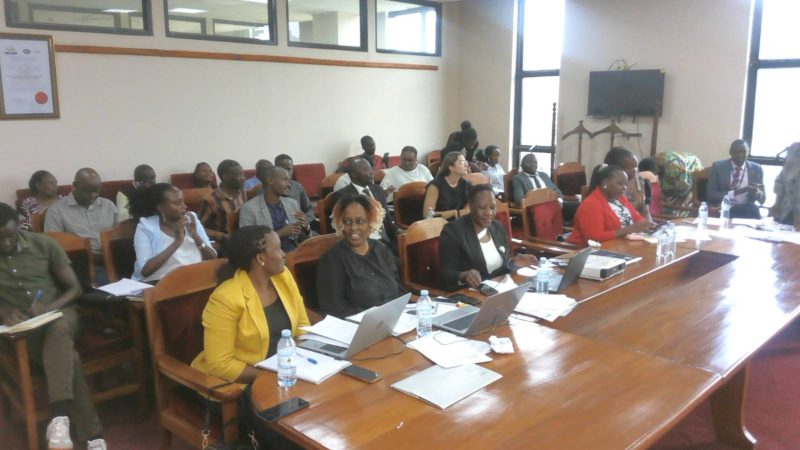
These pressing concerns took center stage during a webinar hosted by the Stop Financing Factory Farming (S3F) coalition, where participants explored how financing industrial livestock farming in Africa impacts farmers, the environment, climate, and public health.
The S3F Africa Regional Coordinator, Mariann Bassey-Olsson, said financial decisions made by development institutions have consequences beyond the businesses receiving the money.
“Since public money shapes food futures, what banks fund today decides what people eat and their livelihoods,” she said.
She pointed out that Africa’s livestock production is a tapestry of pastoralism, mixed crop-livestock farming, and commercial ventures. She urged that agricultural investment should honor this diversity instead of pushing industrial production as the default path.
“We must strengthen our diverse, locally appropriate and sustainable livestock systems, not replace them with industrial models,” she said.
Miriann also challenged the surge in support for agribusinesses, highlighting the stark contrast with the limited financing that reaches agroecological and community-led food systems.
“Factory farming is a finance story that depends on capital, infrastructure and policies that enable its expansion, yet public and private finance increasingly support agribusinesses while far less reaches agroecological community-led food systems,” she said.
Ms. Lizah Makombore of the University of Vermont said existing patterns of industrial production and consumption are pressuring ecosystems and making it difficult to achieve sustainable development goals.
“Because our food systems play such a monumental role in this crisis, they are now undeniably a growing cause for deep transformation,” she said.
Makombore called for a stronger embrace of agroecological farming, emphasizing that agricultural approaches must be rooted in local cultures, wisdom, and environmental realities.
She also highlighted the alarming decline in soil health and stressed the importance of weaving indigenous knowledge and cultural values into sustainable food systems.
“We therefore need to think about how we can shape the context using our cultural values and how we can reclaim our cosmovision, such as Ubuntu,” she said.
Citing an assessment by the Convention on the Elimination of All Forms of Discrimination Against Women (CEDAW) on financing for agroecology through the Green Climate Fund, Makombore said 79% of the funding assessed supported factory farming and other non-agroecological agricultural systems.
She added that agroecological systems received 10.3%, while agroecology received 10.6%.
Mr. Michael Farrelly of the Alliance for Food Sovereignty in Africa (AFSA) cautioned that investment figures alone cannot reveal whether farmers are truly gaining control over their production or reaping the rewards of funded businesses and programs.
“More finance doesn’t automatically mean more power or better incomes for farmers,” he
said.
Farrelly pointed to the Comprehensive Africa Agriculture Development Program (CAADP), the African Union framework guiding agricultural development across member states, as an important influence on investment priorities.
He said the program’s 2026–2035 implementation period has a $100 billion investment target combining public and private financing.
He also referred to regional agricultural policy platforms and summits where governments are seeking to attract private investment into the sector.
Farrelly urged closer scrutiny of the fine print of these investments, especially when they fuel the growth of large commercial agricultural enterprises.
He warned that as corporate agribusinesses gain ground, small-scale producers risk becoming more dependent on commercial buyers, facing mounting debt, and losing their grip on livestock production and marketing.
“The World Bank is helping shape both the businesses and the rules under which they operate. The authors of the report warn that farmers can become more dependent on corporate buyers and debt with less control over their livestock. Some programs aim to reduce the share of people working in agriculture.” He said.
Ms. Nne Nelly Umoren of the Green Leaf Advocacy and Empowerment Center voiced concerns about the hidden social and environmental costs that often accompany large industrial investments, such as fertilizer production.
Citing the Nduruma fertilizer industry, she questioned whether the economic promises of industrial projects truly reflect the realities faced by surrounding communities.
She noted that while such investments are often touted as engines of job creation, increased production, and economic growth, it is crucial to weigh these benefits against the environmental and social burdens local communities’ shoulder.
“They make us believe that investment is for production and for economic growth, food security, and also for the future food of Africa, especially the Nduruma fertilizer,” she said.
“The question behind this is: does industrial growth genuinely improve people’s lives and strengthen food systems? Does it really create economic benefit for investors while transferring environmental and social costs to the local communities?” she asked.
Umoren called for a sharper focus on the lived experiences of communities impacted by industrial projects and a closer look at how the benefits and costs of these investments are shared.
The experts urged that agricultural and development finance should prioritize approaches that empower local food systems and uplift small-scale producers.
They argued that Africa’s food security cannot be achieved through a one-size-fits-all model. Still, they must instead honor the continent’s rich tapestry of farming systems and ecological landscapes.