The economic promise of climate action: How governments, businesses, and communities can join forces for a sustainable future.
By the Witness Radio team.
Climate action is no longer just an environmental concern; it has become an economic imperative as governments and businesses face mounting costs from climate disasters, energy insecurity, and environmental harm.
Investing in renewables, land restoration, and climate resilience not only safeguards economic growth and livelihoods but also helps prevent future losses. But capital alone is not enough; lasting progress demands steady government policies, private-sector commitment, and true community engagement.
These urgent topics took center stage at a high-level discussion hosted by the Organization for Economic Co-operation and Development (OECD) ahead of COP31, where leaders from international institutions, business, and the environmental sector explored how partnerships can speed up climate action.
Presenting the OECD’s economic analysis, Mr. Jaime de Bourbon de Parme, the OECD Environment Director, argued that despite uncertainty in international climate negotiations, the real economy continued to move toward cleaner energy and climate-related investment.
“What hasn’t been stalling is the real economy,” he said, arguing that the focus was increasingly shifting from setting climate ambitions towards implementing them.
He said clean energy is becoming important not only for reducing emissions but also for strengthening energy security and reducing dependence on volatile fossil fuel markets.
“Fossil fuels were seen as a stable energy source and renewable energy was the new kid on the block. Now we see that fossil fuels are seen as a source of instability, and renewable energy is a source of stability going forward,” Jaime said.
Jaime also pointed to the growing investment in clean energy, noting that of approximately $3 trillion invested in energy systems, about $2 trillion went towards clean energy, compared with $1 trillion for fossil fuels. He adds that early investment in climate action is therefore not simply an environmental choice but an economic decision.
“The costs today are cheaper than in five years or in 10 years or in 15 years. So, acting early makes sense,” he said.
To turn climate investment pledges into real progress, businesses need policies that inspire long-term confidence. Peter Bakker, President and CEO of the World Business Council for Sustainable Development (WBCSD), noted that sustainability is fast becoming a competitive edge for companies, not just a box to tick for corporate responsibility.
Drawing on the organization’s Business Breakthrough Barometer, which surveyed more than 500 executives across more than 50 countries, Bakker said 89 percent of companies expected to maintain or increase their sustainability investments compared with the previous year.
He also noted that 85 percent of respondents wanted more government policy, rather than less, to support the transition.
He also warned against focusing solely on the supply side of the energy transition, stressing that governments must spark demand for cleaner technologies while investing in their production.
“We shouldn’t only focus on the supply side; we must focus on the demand side,” he said.
Bakker highlighted the private sector’s growing opportunities, from electrification and energy-smart buildings to cleaner ways of making goods.
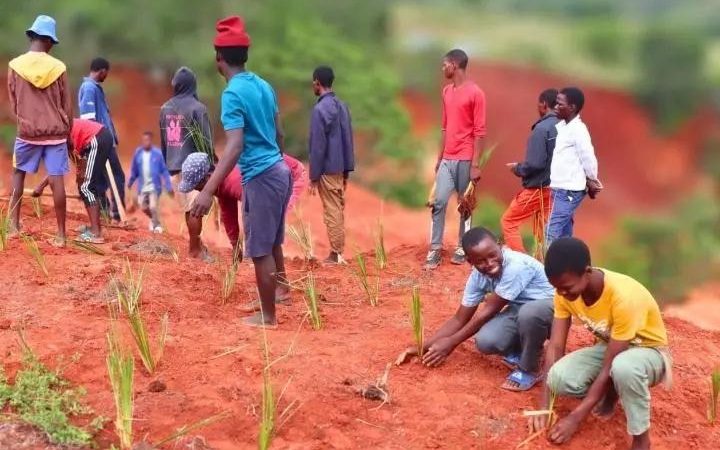
Beyond energy, restoring damaged land and boosting drought resilience open new doors to blend environmental protection with economic growth.
Dr.Yasmin Fouad, Executive Secretary of the United Nations Convention to Combat Desertification (UNCCD), said land degradation and drought were increasingly threatening economic stability, food security and human livelihoods.
She noted that half of global GDP depends on nature. At the same time, one-fifth of the world’s land is already degraded, affecting approximately 1.3 billion people, and restoring degraded land should be treated as an economic investment rather than an expense government can postpone.
“The studies show you that for every dollar that you are investing now as a cost to restore land, there is a revenue that comes to around $30,” Fouad said.
Yet, despite these promising economic returns, she admitted that scarce financing, budget strains in vulnerable countries, and too few projects ready to attract private capital still hold back land restoration investment.
She proposed a financing approach in which multilateral development banks help reduce investment risks, making it easier for private companies to participate in restoration projects.
“The financial architecture that was developed for renewable energy needs to be transferred and realized very quickly on land restoration,” she said, adding that under such arrangements, development banks could help reduce the risks associated with restoration projects, making them more attractive to private investors.
Fouad also emphasized the importance of aligning national policies so that investments in climate adaptation, agriculture, biodiversity and land restoration reinforce rather than compete with one another. She pointed to the UNCCD’s Business for Land initiative, which brings governments and businesses together to discuss investment opportunities in land restoration.
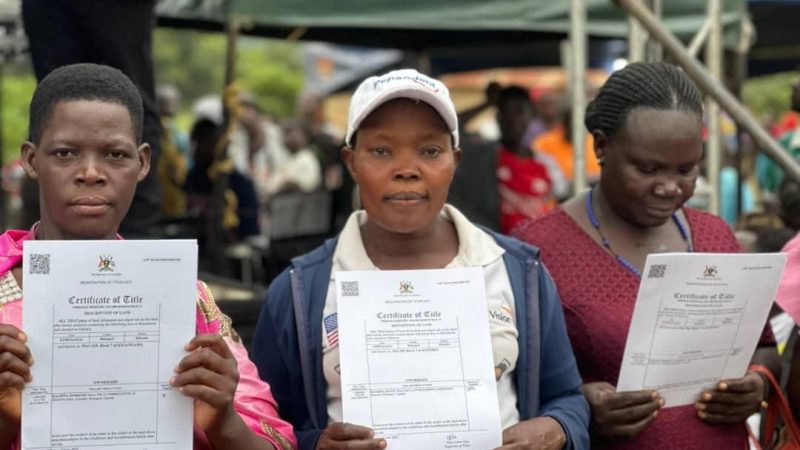
The initiative has attracted interest beyond agricultural companies, including businesses in the fashion, beverage. However, she emphasized that investment only works when paired with secure land rights and real community involvement full of community participation.
“If we don’t have clear land rights to allow the private sector to invest, and clarity on how many years I’m owning land, what is the legality of that, that would really prevent the private sector from pitching in,” she said.
While restoring land helps reduce environmental risks, climate resilience must also be woven into infrastructure planning and investments. Mark Fletcher, Head of Zurich Resilience Solutions for Asia-Pacific, urged businesses and governments to factor in climate risks before breaking ground, not after disaster strikes.
“The fundamental barrier today is that resilience is still treated as a recovery tool, not as a design input,” he said.
Fletcher cited research by Zurich on renewable energy assets across Southeast Asia, covering more than 1,000 wind, solar, geothermal and hydropower locations.
The assessment found that 75 percent of these sites, worth an estimated $165 billion, face high risk from climate hazards within five years. Investing in resilience from the start could slash future losses.
According to Fletcher, the study estimated that investing approximately $13 billion in resilience measures at the investment stage could prevent about $85 billion in future losses.
He suggested that insurers can nudge businesses toward resilience by rewarding reduced risks with better insurance terms, such as improved coverage and lower deductibles. protection, that property is a better risk,” he said,
Governments, financial institutions, and businesses all play vital roles in funding and driving climate action. Still, the conversation also underscored the importance of bringing communities into the heart of the transition.
Fouad cautioned that restoration projects risk causing new problems if local communities are left out of decisions about the land and resources they rely on.
“If you don’t do that, you may end up doing something that they did not participate in, and again that would cause conflict and cause migration,” she said.
Jaime also highlighted civil society’s crucial role in building trust and shaping climate investments for the long haul. He described these organizations as bridges, connecting governments and businesses with the communities their investments touch.
“Civil society has an important role in ensuring that the just transition is inclusive and sustainable. Beyond their traditional role of holding institutions accountable, civil society organizations can build relationships and act as agents of trust, helping ensure environmental initiatives are designed for long-term success. This requires a shift from criticism towards collaboration, with governments, businesses and communities working together to advance the transition,” he concluded.