Biodiversity Goals: The world has no time to meet its 2030 goals.
By the Witness Radio Team
With fewer than four years left to meet global biodiversity targets, a new United Nations assessment urges country to accelerate efforts to protect and restore nature, warning that current efforts fall short of promises.
The State of Biodiversity Action report, released just before the 17th Conference of the Parties to the Convention on Biological Diversity (COP17) in Armenia, reveals that while almost 90 percent of countries have set national biodiversity targets, less than half are making progress toward achieving them.
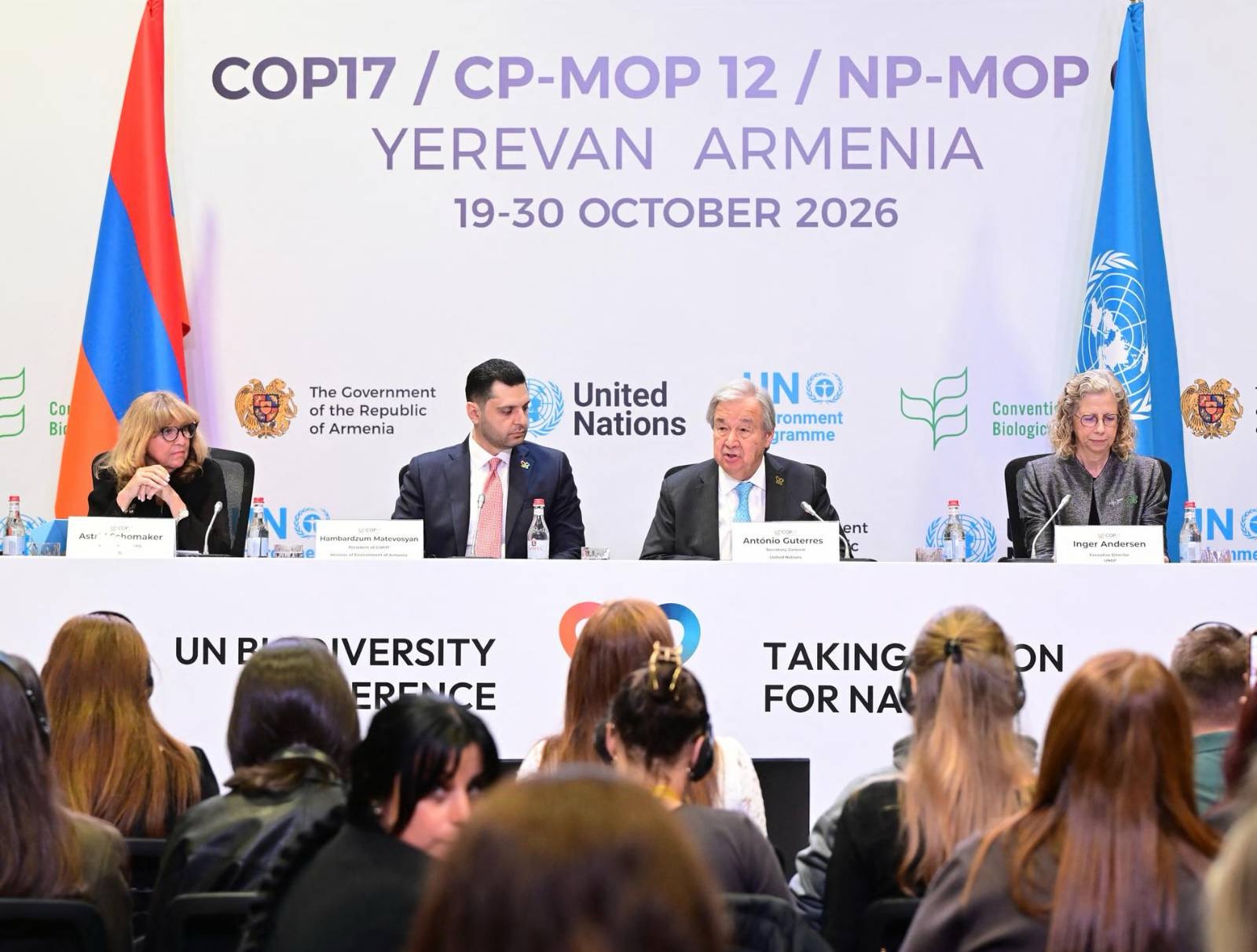
COP17 starts today in Yerevan, Armenia, and runs until October 30, 2026.
As the conference opens, the findings cast doubt on whether countries can fulfill the Kunming-Montreal Global Biodiversity Framework, adopted in 2022 to stop and reverse biodiversity loss by 2030.
The Framework addresses the principal drivers of biodiversity loss, including land- and sea-use change, unsustainable exploitation of species, climate change, pollution and invasive alien species, as well as economic and financial activities contributing to biodiversity loss.
A key ambition of the framework is to safeguard at least 30 percent of the world’s land and sea by 2030. The assessment reveals that current pledges fall short. Even if all commitments are met, just 26 percent of land and 12 percent of marine ecosystems would be protected by the deadline.
The gap between promises and progress was highlighted by Astrid Schomaker, Executive Secretary of the Convention on Biological Diversity, who called on governments to use the global review to identify shortcomings and accelerate implementation.
“We know where we stand. We know where the gaps are. Now we must work together to close them,” Ms. Schomaker said.
Her words highlight the conference’s core challenge. Countries know what must be done, but meaningful action is still lagging.
The assessment points to gaps in funding, coordination among government bodies, and the data needed to measure progress. It also shows that targets requiring action beyond environment ministries, such as business practices, sustainable consumption, harmful incentives, and finance, are falling furthest behind.
To meet the 2030 targets, governments must integrate biodiversity concerns into broader economic and development choices.
At the opening of COP17 on 19 October, the outgoing Colombian presidency also stressed the need to turn international agreements into practical results.
David Olarte Amaya, who represented Colombia’s COP16 presidency, described the gathering in Yerevan as a decisive moment for the planet, noting that the international community had an urgent responsibility to turn the framework’s commitments into “concrete, measurable, and lasting results.”
He also stressed that biodiversity is deeply connected to daily life, underpinning water and food security, resilient communities, thriving economies, and the well-being of society.
“Biodiversity is not merely an environmental concern but also the foundation of our water and food security, the resilience of our territories, the productivity of our economies, and the well-being of our societies,” he stressed.
He noted that the true measure of the conference’s success will not be the number of decisions made, but whether they spark real change in countries and communities.
“Today, as we hand over the COP16 presidency, Colombia reaffirms its commitment to solution-oriented multilateralism, grounded in dialogue, mutual respect among parties, and shared responsibilities. We express our confidence in Armenia’s leadership and our readiness to contribute constructively to the work of this conference,” he added.
Armenia’s Minister of Environment and incoming COP17 president, Mr. Hambardzum Matevosyan, recognized that countries must now focus on what works, where progress is lacking, and what must change to accelerate results.
“COP 15 gave us the framework. COP 16 advanced important mechanisms for its implementation. COP 17 must now help us determine where we stand, what is working, where progress is falling short, and what must change to accelerate implementation,” Mr. Matevosyan said.
He praised Colombia’s COP16 presidency and described the handover as a seamless continuation of the global push for biodiversity.
Mr. Matevosyan also highlighted the Leaders for Nature Summit in Yerevan, which concluded with the Yerevan Declaration—a call to action for nature and a reminder to turn promises into tangible outcomes.
Staying true to the promise of an inclusive COP, Matevosyan pledged that Armenia’s presidency would listen to Indigenous Peoples, local communities, women, youth, civil society, academia, local leaders, businesses, and the finance sector, recognizing that governments cannot tackle biodiversity loss on their own.
“The challenges we face are too big to be addressed by governments alone. The story, the parallel forums, thematic days, and numerous side events will inform and support negotiation outcomes,” he concluded.
As the 2030 deadline looms, the real test is whether countries can move from promises to action and deliver the transformation needed to stop and reverse biodiversity loss. The Yerevan review gives governments a chance to face the gaps, build stronger partnerships, and turn words into measurable progress for nature and all who rely on it.